

Which Car Fluids Need Changing - And What Happens If They’re Ignored
Your car relies on more than just fuel to run properly. Engine oil, coolant, brake fluid, transmission fluid and several other fluids quietly protect performance, safety and long term reliability. Neglecting them is one of the fastest ways to turn a minor service into a major repair. This guide explains which car fluids need changing, how often, what happens if they’re ignored and when to seek professional advice.
Quick navigation
- What are car fluids and why do they matter?
- Engine oil
- Transmission fluid
- Brake fluid
- Engine coolant (antifreeze)
- Power steering fluid
- Differential and transfer box oils
- Windscreen washer fluid
- Signs your car fluids need changing
- Common fluid mistakes to avoid
- Car fluids FAQs
- Ready to stay ahead of costly repairs?
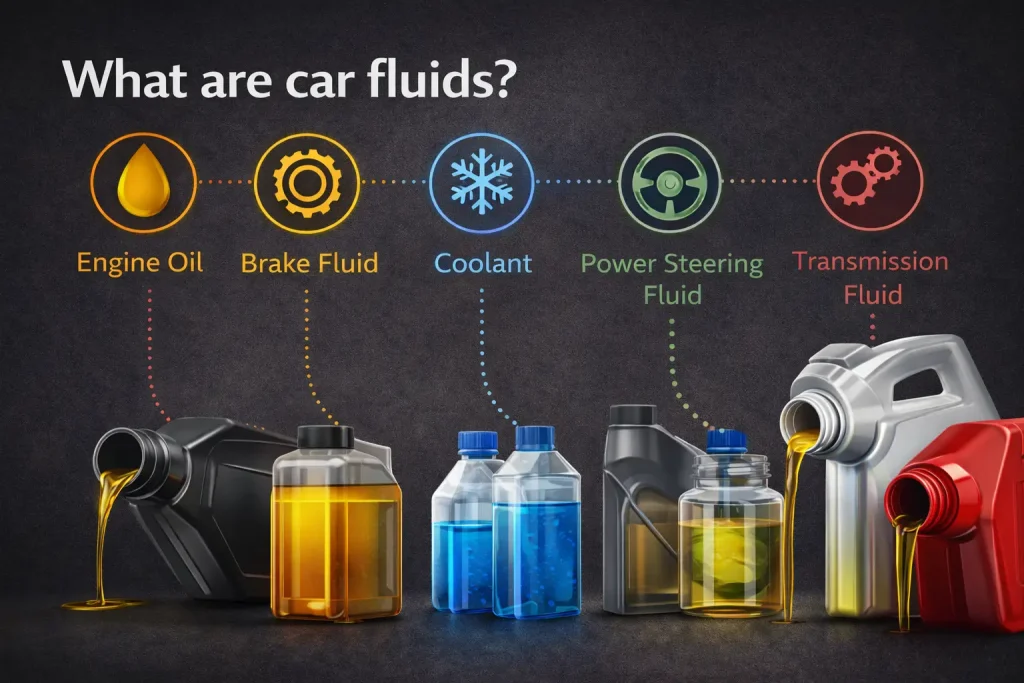
What are car fluids and why do they matter?
Modern vehicles rely on a network of specialised fluids to lubricate moving parts, manage heat, transmit hydraulic pressure and protect components from corrosion. Each fluid has a specific job and a limited service life.
Over time, heat cycles, contamination and moisture cause fluids to degrade and protection can drop away long before obvious symptoms appear.
Regular fluid changes are not about upselling or unnecessary work. They are about preventing wear, maintaining safety and protecting the value of your vehicle.
Engine oil
Engine oil is the most critical service fluid in any car. It lubricates moving components, reduces friction, helps regulate temperature and carries contaminants to the oil filter.
Why engine oil degrades
- Heat breaks down oil additives
- Combustion by products contaminate the oil
- Short journeys cause moisture build up
Typical change interval
- Conventional oil: often around 5,000 miles, depending on the vehicle
- Fully synthetic oil: typically 7,500–10,000 miles
- Always follow the manufacturer’s service schedule
What happens if oil isn’t changed
- Increased engine wear
- Sludge build up
- Overheating
- Premature engine failure
Transmission fluid (manual and automatic)
Transmission fluid lubricates gears and bearings and in automatic gearboxes, also acts as a hydraulic fluid to control gear changes.
Typical change interval
- Manual gearboxes: typically 40,000–60,000 miles
- Automatic gearboxes: typically 30,000–60,000 miles depending on design and usage
Many manufacturers now describe transmission fluid as “sealed for life”. In real world driving, that usually means the life of the warranty, not necessarily the full life of the vehicle, so periodic changes are still sensible if you plan to keep the car long term.
Warning signs
- Hesitant or harsh gear changes
- Slipping gears
- Dark or burnt smelling fluid
Brake fluid
Brake fluid transfers pedal pressure into stopping power. It is hygroscopic, meaning it absorbs moisture from the air over time.
Why brake fluid must be changed
- Water lowers the boiling point
- Increased risk of brake fade under hard braking
- Internal corrosion of brake components
Typical change interval
- Every 2 years, regardless of mileage
This is a safety critical service and should never be ignored.
Engine coolant (antifreeze)
Coolant regulates engine temperature and prevents freezing in winter and overheating in summer. It also contains corrosion inhibitors that protect the cooling system.
Typical change interval
- Every 4–5 years for most modern long life coolants
- Always use the correct specification for your vehicle
Common issues
- Sludge formation if coolant types are mixed incorrectly
- Corrosion inside radiators, heater matrices and pipework
- Overheating and potential head gasket damage
Most modern UK cars use long life coolant, but you should always check the service book or manufacturer schedule.
Power steering fluid
Hydraulic power steering systems rely on fluid to assist steering effort and lubricate internal components.
Typical change interval
- Typically around 60,000-80,000 miles where the manufacturer specifies replacement
Warning signs
- Heavy or inconsistent steering
- Groaning or whining noises when turning
- Dark or contaminated fluid in the reservoir
Some modern vehicles use electric power steering instead and do not have power steering fluid.
Differential and transfer box oils
Differentials and transfer boxes contain heavy duty gear oil that protects gears under high load.
Typical change interval
- Typically 60,000–120,000 miles depending on design and use
- Shorter intervals are advisable for regular towing, 4×4 or performance driving
Why this matters
Neglected differential oil can lead to noisy operation, excessive wear and expensive drivetrain repairs.
Windscreen washer fluid
Washer fluid does not affect mechanical performance but plays a vital role in visibility and safety.
Key points
Top up regularly so jets always work when you need them
- Use winter rated fluid in cold weather to reduce the risk of freezing
- Summer bug wash can freeze in winter conditions
Driving without effective washer fluid can seriously reduce visibility and in the UK, can in serious cases lead to a careless driving charge with a fine and penalty points if it contributes to unsafe driving.
Signs your car fluids need changing
- Burnt smells from engine oil or transmission fluid
- Spongy or inconsistent brake pedal feel
- Warning lights or messages on the dashboard
- Dark, thick, milky, glittery or cloudy fluids on the dipstick or in reservoirs
- Whining or groaning noises from steering or drive system
- Reduced performance, efficiency or refinement
Many fluid issues develop quietly. By the time symptoms appear, damage may already be starting.
Quick reference table – car fluids at a glance
| Fluid | Typical change interval | Why it matters if ignored |
| Engine oil | 10,000 miles or 12 months | Accelerated engine wear, sludge build up, engine failure |
| Transmission fluid | 30,000–60,000 miles | Poor shifting, overheating, gearbox damage |
| Brake fluid | Every 2 years | Brake fade, corrosion, reduced stopping power |
| Coolant (antifreeze) | 4–5 years | Overheating, internal corrosion, head gasket failure |
| Power steering fluid | 60,000–80,000 miles | Heavy steering, pump failure |
| Differential / transfer box oil | 60,000–120,000 miles | Noisy operation, drive system wear |
| Windscreen washer fluid | Top up as needed | Reduced visibility, safety risk |
Intervals vary by vehicle. Always follow manufacturer guidance where specified.
Common fluid mistakes to avoid
- Using the wrong specification fluid for your make and model
- Mixing different coolant types
- Overfilling reservoirs beyond the maximum mark
- Believing “lifetime fluid” claims without context
- Ignoring time based service intervals on low mileage cars
Using the wrong fluid can cause chemical reactions, seal damage and component failure, even if everything initially appears to work.
Car fluids FAQ's
Which car fluid is the most important?
Engine oil is generally the most critical, closely followed by brake fluid and coolant from a safety and reliability perspective.
How often should I check my fluids?
At least at every oil service and before long journeys. Many owners also do a quick monthly visual check of levels and for any obvious leaks.
Can I top up fluids myself?
Some fluids can be topped up safely if you use the correct specification and keep everything clean. However, incorrect fluid choice or contamination can cause damage, so when in doubt, seek advice before topping up.
What happens if I use the wrong fluid?
Using the wrong fluid can lead to poor lubrication, overheating, corrosion and in severe cases, complete system failure. It may also void warranties or lead to costly repairs.

Ready to stay ahead of costly repairs?
If you’re not sure when your vehicle’s fluids were last checked or changed, a quick conversation can make all the difference. Catching fluid issues early helps protect performance, safety and long-term reliability and can prevent small maintenance tasks from turning into expensive repairs later on.
At Bartlett Automotive, we follow manufacturer specifications, use the correct fluids for your vehicle and take the time to explain what genuinely needs attention now and what can safely wait. If you’d like tailored advice on your car’s fluid condition or service schedule, you’re very welcome to get in touch and book an appointment.


